
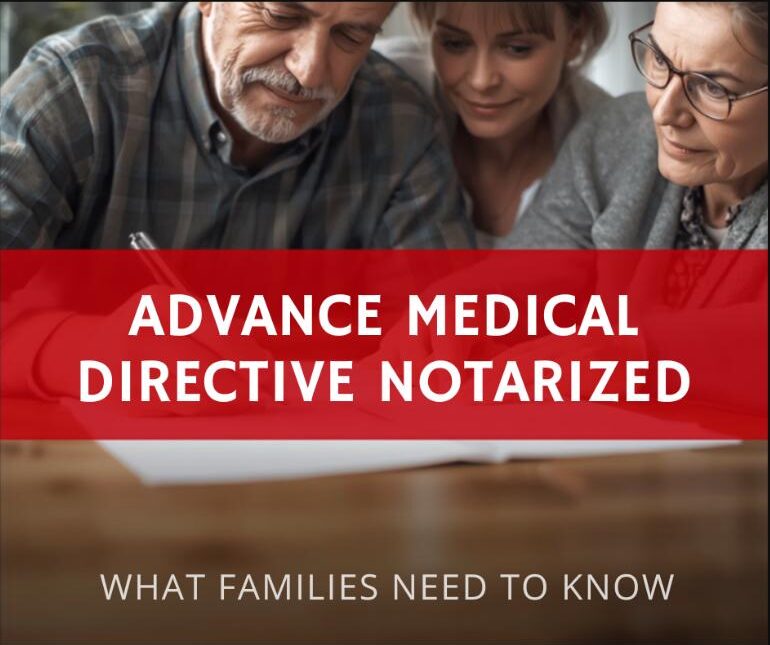
A daughter called me two days before her mother’s scheduled surgery at Dameron Hospital. The surgeon’s office had asked whether her mother had an advance medical directive on file, and she didn’t, not because nobody thought about it, but because the finished document had been sitting in a folder since the spring while everyone assumed there would be time later. There wasn’t. I met them at the house the evening before the surgery, verified her mother’s identification, watched her sign, and notarized the directive so it was in place before she checked in the next morning.
That story is close to a weekly occurrence in this line of work. Advance medical directives are exactly the kind of document people mean to handle and then don’t, until a surgery date, a diagnosis, or an aging parent’s declining health forces the issue. If you’re trying to understand what actually needs to happen to get one properly executed in San Joaquin County, here’s the practical breakdown.
What an advance medical directive is and where a notary fits in
An advance medical directive, sometimes called a healthcare directive or living will depending on the exact form, lets you specify your medical treatment preferences and name someone to make healthcare decisions on your behalf if you’re unable to speak for yourself. California allows these documents to be either notarized or signed in front of two witnesses, so notarization isn’t always strictly required, but many families, attorneys, and healthcare institutions prefer the notarized route because it adds a clear, well documented layer of identity verification that can prevent disputes later.
My part in this process is the same as it is for any estate document: confirm the identity of the person signing, watch them sign willingly, and apply my notarial seal and journal entry. I don’t help you decide what your treatment preferences should be, who to name as your healthcare agent, or which version of the form your situation calls for. That’s a conversation for you, your family, and ideally your physician or an attorney. What I make sure of is that once you and your family have made those decisions, the paperwork is executed correctly so hospitals and healthcare providers actually honor it. Advance medical directives are often finished alongside other estate planning paperwork, and if a living trust, a will, or a power of attorney also needs to be signed, we can usually handle everything in a single appointment instead of scheduling separate visits.
Why these documents get put off, and why that’s a real risk
Advance medical directives deal with a topic most people would rather not think about, which is exactly why they tend to sit unsigned longer than almost any other estate document. Families finish the paperwork with an attorney or download a form, fully intend to get it notarized, and then life gets in the way for weeks or months. The risk is that these documents matter most in situations that arrive without warning, a stroke, a car accident, a sudden serious diagnosis, none of which check anyone’s calendar first.
Once someone is unconscious, sedated, or otherwise unable to communicate, it’s too late to execute a new advance medical directive. If nothing was signed beforehand, the family and medical team are left navigating decisions without documented guidance, which is often more stressful for everyone involved than the ten minutes it would have taken to get the document notarized while things were calm.
Common mistakes with advance medical directive signings
The first mistake is treating the directive as finished once it’s drafted or downloaded. Until it’s signed and either notarized or properly witnessed, it carries no legal weight, and a hospital cannot rely on it. Schedule the signing as soon as the document is ready.
The second mistake is waiting for a hospital admission to trigger the paperwork. By the time someone is being admitted for an urgent procedure, stress is high, time is short, and family members are often juggling multiple tasks at once. Getting the directive signed while someone is healthy, calm, and not facing an immediate procedure produces a far less rushed, more thoughtful signing.
The third mistake is not confirming which specific form the hospital or healthcare system prefers. Some systems have their own advance directive form in addition to the general California form, and using the wrong one can create confusion at exactly the moment clarity matters most. A quick call to the hospital’s patient advocate or admissions office can confirm which form to use.
The fourth mistake is assuming a hospital has a notary readily available around the clock. Many hospitals do not provide notary services at all, and the ones that do often limit it to weekday business hours through a chaplain’s office or patient services department. If your loved one needs this handled on a weekend, a holiday, or outside a nine to five window, you need a notary who actually works those hours.
What a mobile signing for an advance medical directive looks like
You call or book online, tell me where the signing needs to happen, and we set a time that works around your situation rather than a storefront’s posted hours. I’ve completed these signings at kitchen tables well before any health crisis, in hospital rooms the night before scheduled procedures, and in memory care and assisted living facilities as part of a broader estate planning update. I bring my notary seal and journal, confirm identification, watch the document get signed, and notarize it on the spot so it’s ready to hand to the hospital or care team immediately.
With more than 20 years handling estate planning and healthcare documents across San Joaquin County and more than 180 Google reviews from families and professional clients, I built this business specifically to be available for the moments that can’t wait for a normal weekday appointment. On site notarization before and after regular business hours and on weekends is exactly how most advance medical directive signings actually happen.
A few questions families ask before booking
Does the directive need to be notarized, or is signing in front of two witnesses enough? California allows either option for most advance medical directive forms. Many families and healthcare systems still prefer notarization because it adds a documented identity check, but confirm with your attorney or the receiving hospital which they require or prefer.
Can I get this notarized if my parent is already in the hospital and somewhat confused from medication? Only if they’re currently able to understand what they’re signing and communicate that they want to sign. If there’s real uncertainty about capacity in the moment, that needs to be resolved with the medical team first, since evaluating capacity isn’t something a notary is qualified to do.
What if the healthcare agent named in the document isn’t available to be there for the signing? The named agent generally doesn’t need to be present for the signing itself, only the person creating the directive and any required witnesses. Confirm this detail with whoever prepared your specific form.
Can this be done quickly if surgery is scheduled for tomorrow? Yes, this is one of the most common reasons families call me, and same day or next day appointments, including evenings, are exactly what mobile notarization is built for.
When to call
If you or a family member has a finished advance medical directive sitting unsigned, don’t wait for a health scare to make it urgent. Book the signing now, while it’s simple. If you’re already facing a scheduled procedure or a sudden hospital stay, call and I’ll work around your timeline, including evenings, early mornings, and weekends.
A short disclaimer: I’m a notary, not an attorney. I can’t tell you which healthcare decisions to include, who to name as your agent, or whether a family member currently has the capacity to sign. Those questions belong with your physician and, where legal guidance is needed, an attorney. What I provide is fast, reliable notarization once your document and your decisions are ready.
Ready to get an advance medical directive signed and notarized? Book a Consultation or call 209 649 5531 and we’ll set up a time that works, including today if your situation calls for it.